


Rubber product failure analysis and prevention: How to extend the life of Industrial seals and Gaskets
Rubber Product Failure Analysis and Prevention: How to Extend the Life of Industrial Seals and Gaskets is a critical topic for manufacturers striving for reliability, safety, and long-term equipment performance. At TechSharpRubber, we understand that industrial rubber parts are the heart of many industrial systems such as heavy machinery, hydraulic equipment, and automotive and marine applications. When seals and gaskets fail, the result can be costly downtime, product contamination, safety hazards, and expensive repairs.
Most companies will just replace the failed parts, but the real value is in understanding how and why failure happened in the first place. Strategic failure analysis allows companies to identify root causes, improve material selection, optimize operating conditions, and extend component life. This leads to lower maintenance costs, increased operational efficiency, and improved equipment reliability.
TechSharpRubber’s guide to the most common reasons for seal and gasket failure and how to prevent it, plus practical tips to get the most out of your rubber components. Whether you are a Whether you are a maintenance engineer, procurement manager or plant operator, these insights will help you to protect your equipment and improve long-term productivity.
Why Rubber Product Failure Analysis Matters
Rubber parts are always subjected to heat, pressure, chemicals, friction and environmental stress. Over time, these factors can lead to degradation, leakage and mechanical failure. A complete failure analysis helps manufacturers and maintenance teams find the exact root cause of a problem instead of just replacing parts over and over again.
A proper analysis can:
- Reduce unplanned downtime
- Improve equipment reliability
- Lower maintenance and replacement costs
- Enhance workplace safety
- Extend the lifespan of machinery and rubber products
For companies relying on industrial rubber components, proactive failure prevention is a cost-effective strategy that delivers long-term operational benefits.
Common Causes of Seal and Gasket Failure
1. Heat Degradation
Excessive heat is one of the leading causes of rubber deterioration. High temperatures can cause rubber to harden, crack, lose elasticity, and develop compression set.
Prevention Tips
- Choose heat-resistant rubber compounds such as silicone or Viton®
- Monitor operating temperatures regularly
- Avoid exceeding the manufacturer’s recommended temperature limits
2. Chemical Exposure
Oils, fuels, acids, solvents, and cleaning agents can damage rubber materials if the wrong compound is used. Chemical incompatibility may lead to swelling, softening, shrinkage, or surface breakdown.
Prevention Tips
- Select rubber materials based on chemical compatibility charts
- Use nitrile (NBR) for oil resistance and EPDM for water and steam applications
- Test materials in actual operating conditions before full-scale use
3. Compression Set
Compression set occurs when a seal remains compressed for long periods and cannot return to its original shape. This reduces sealing effectiveness and can cause leaks.
Prevention Tips
- Use high-quality rubber compounds with low compression set characteristics
- Follow proper torque specifications during installation
- Replace seals at recommended maintenance intervals
4. Improper Installation
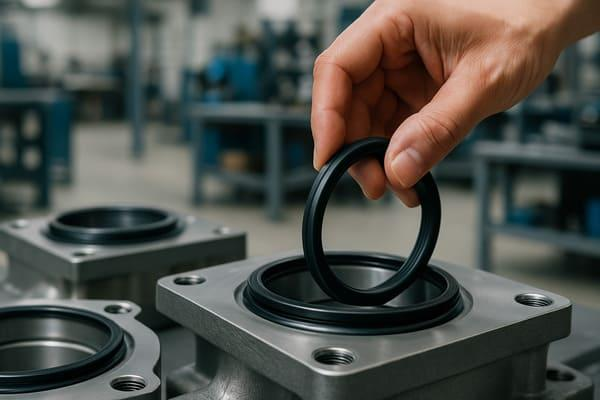
Even premium seals can fail if installed incorrectly. Common mistakes include over-tightening, misalignment, twisting, and using incorrect dimensions.
Prevention Tips
- Train maintenance personnel on proper installation procedures
- Use the correct tools and lubrication methods
- Verify seal dimensions and alignment before assembly
5. Mechanical Wear and Abrasion
Friction, vibration, and moving parts can gradually wear down seals and gaskets, especially in high-speed or high-pressure applications.
Prevention Tips
- Use wear-resistant rubber compounds
- Ensure proper lubrication in dynamic systems
- Inspect moving components for misalignment or excessive friction
6. Environmental Factors
UV radiation, ozone, moisture, and dust can accelerate rubber aging, particularly in outdoor applications.
Prevention Tips
- Use UV- and ozone-resistant materials like EPDM
- Store spare components in cool, dry environments
- Protect exposed seals from direct sunlight and harsh weather
The Importance of Failure Analysis
Failure analysis is more than identifying a damaged part. It involves a systematic investigation to determine the exact root cause of failure. This process may include:
- Visual inspection
- Material testing
- Microscopic examination
- Chemical analysis
- Review of operating conditions and maintenance records
By understanding the root cause, companies can implement corrective actions that prevent recurring problems and improve the performance of industrial rubber components.
How to Extend the Life of Industrial Seals and Gaskets
Choose the Right Material
Material selection is the foundation of long-lasting performance. Different applications require different rubber compounds based on temperature, pressure, and chemical exposure.
Popular Options Include
- EPDM for water, steam, and outdoor applications
- Nitrile (NBR) for oil and fuel resistance
- Silicone for high-temperature environments
- Viton® (FKM) for aggressive chemicals and extreme temperatures
Implement Preventive Maintenance
Regular inspections and scheduled replacements help detect issues before they become critical failures.
Best Practices
- Inspect seals and gaskets for cracks, swelling, or hardening
- Monitor leak points and pressure changes
- Replace components based on operating hours and manufacturer recommendations
Optimize Operating Conditions
Operating equipment within design limits significantly extends component lifespan.
Key Factors to Monitor
- Temperature
- Pressure
- Fluid compatibility
- Mechanical alignment
Use Quality Manufacturing Standards
High-quality manufacturing processes ensure consistent performance and durability.
At TechSharpRubber, we prioritize precision engineering, strict quality control, and application-specific solutions to deliver reliable rubber products for demanding industries.
Benefits of Proper Seal and Gasket Management
Investing in failure prevention and quality industrial rubber components provides several advantages:
- Reduced equipment downtime
- Lower maintenance and replacement costs
- Improved operational safety
- Enhanced equipment efficiency
- Longer service life for machinery and components
- Better environmental compliance through leak prevention
Frequently Asked Questions (FAQs)
What are the most common signs of rubber seal failure?
Common signs include visible cracks, hardening, swelling, deformation, leakage, loss of flexibility, and surface wear. Regular inspections can help detect these issues early.
How often should industrial seals and gaskets be replaced?
Industrial seals and gaskets should be replaced based on operating conditions, wear levels, and manufacturer recommendations rather than a fixed schedule. Regular inspections help identify signs of cracking, hardening, swelling, or leakage before failure occurs. Using high-quality industrial rubber components can significantly extend service life and improve equipment reliability.
For more insights, read our guide: Rubber Products in the Oil & Gas Industry in Qatar | Industrial Applications Guide, which explains how durable rubber solutions enhance performance in demanding industrial environments.
Which rubber material is best for high-temperature applications?
Silicone and Viton® are commonly used for high-temperature environments because they maintain flexibility and performance under extreme heat.
Can improper installation really cause seal failure?
Yes. Over-tightening, misalignment, twisting, and using incorrect dimensions can place excessive stress on seals and lead to premature failure.
Why is failure analysis important for industrial rubber components?
Failure analysis identifies the root cause of problems, allowing companies to implement corrective actions, improve material selection, reduce downtime, and extend component lifespan.
Conclusion
Extending the life of industrial seals and gaskets requires more than simply replacing worn parts. A proactive approach that combines proper material selection, preventive maintenance, optimized operating conditions, and thorough failure analysis is essential for long-term reliability. At TechSharpRubber, we are committed to delivering high-quality industrial rubber components that meet the demanding needs of modern industries.
By understanding the root causes of seal and gasket failure and implementing effective prevention strategies, businesses can reduce downtime, lower maintenance costs, and improve overall equipment performance. Investing in quality rubber solutions and expert support is not just a maintenance decision—it is a strategic step toward greater operational efficiency and long-term success.