

Rubber Mats in Qatar: A Practical Guide to Choosing the Right Solution
Why businesses in Qatar use rubber mats
A floor in a workshop, warehouse, production area, or loading zone has to handle more than everyday foot traffic. Equipment may move across it. Tools or materials may be dropped. Workers may stand in one place for long periods. In these settings, the right rubber mat can help protect the floor, provide a more comfortable surface, and support safer day-to-day operations.
For businesses searching for rubber mats in Qatar, the challenge is finding a solution that suits the space and its actual demands. A mat designed for a light-duty walkway may not be the right choice beside heavy equipment or in a maintenance area. Material, thickness, surface pattern, and installation all affect how well it performs.
Start with the job the mat needs to do
There is no single rubber mat that suits every facility. Some buyers need a protective layer beneath machinery. Others want rubber flooring for a work area, a surface that is easier to clean, or material for lining and sealing. Before comparing products, identify what the mat will need to do, where it will be installed, and what conditions it will face.
Tech Sharp Contracting & Trading supplies rubber sheet rolls and mats in Qatar for industrial applications. Its product information describes uses including flooring, equipment protection, vibration damping, protective lining, gaskets, and sealing systems. Product range: https://techsharprubber.com/products-services/rubber-sheet-rolls-mats
1. Common types and uses of rubber mats
Rubber mats are selected for a combination of practical features. Depending on material and design, they may provide a durable surface, protect floors from wear, or create a layer between equipment and the floor beneath it. For industrial facilities, rubber sheets and rolls can also be cut or adapted to suit particular areas and applications.
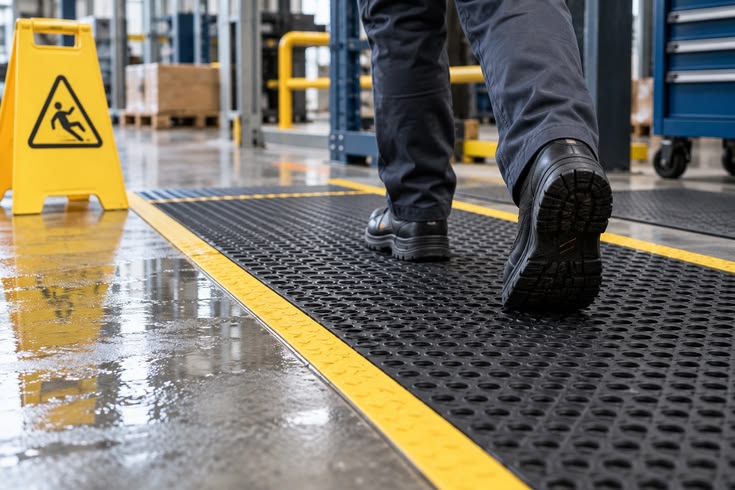
Flooring and walkways: Rubber flooring can be used in selected work zones where a durable surface is needed. The right option depends on expected traffic, cleaning routine, and whether the mat will lie flat and secure in its intended position.
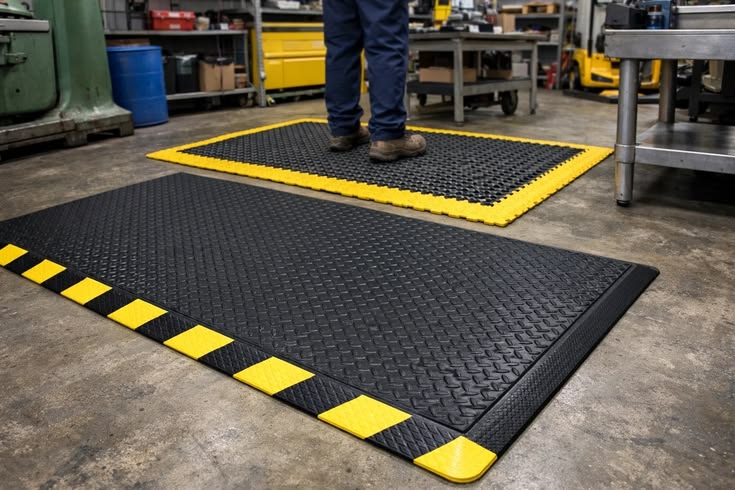
Workstations and standing areas: A mat at a fixed workstation can provide a defined surface for employees who spend extended periods in one location. Consider cleaning, secure edges, and whether the surface suits the work being done.
Equipment protection and vibration damping: Rubber between equipment and a supporting surface may help protect against wear and reduce vibration transfer. The suitable solution depends on the equipment, load, operating conditions, and installation. Confirm compatibility with the supplier or equipment specialist.
Protective lining and sealing: Rubber sheets may be used for lining, gaskets, or sealing systems where material and dimensions suit the application. If exposed to oils, chemicals, heat, or outdoor conditions, share those details with the supplier before selecting a grade.
The term “rubber mat” covers a wide range of products. A general-purpose floor mat and a sheet specified for a particular industrial process should not be treated as interchangeable. The application should guide the product choice.
2. Where rubber mats can help across Qatar’s workplaces
The value of a mat often comes down to the work happening in a particular area. A warehouse may need to protect a busy floor or create a defined route for staff. A workshop may need a robust surface around benches and maintenance stations. A plant may require rubber sheets for equipment protection, lining, or sealing.
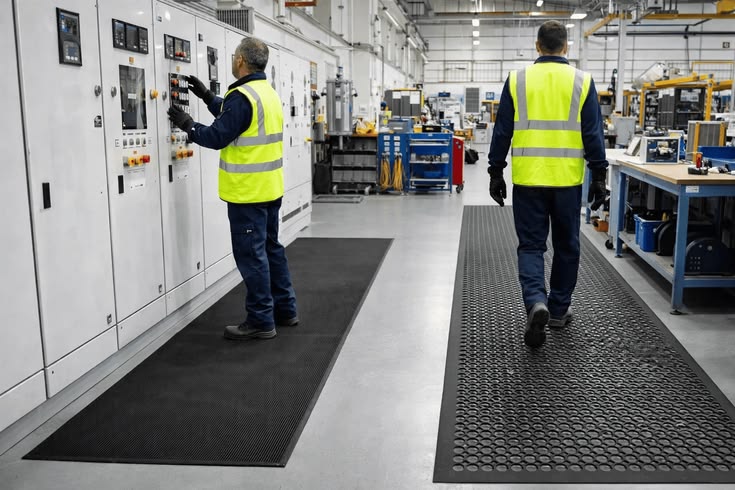
In a warehouse or logistics space, consider how people, carts, and equipment move through the area. Mats should not interrupt routes or become loose at the edges. If heavy loads or vehicles will pass over them, confirm that the product is suitable for that use.
In a workshop or production area, consider how frequently the surface will be cleaned, whether small parts or tools could damage it, and whether workers need a mat at fixed stations. Make sure the selected material is appropriate for fluids or substances used nearby.
For plant rooms and industrial facilities, buyers may be looking for a solution that helps protect floors, damp vibration, or serve as lining. These are application-specific uses: the product’s dimensions and material must match the equipment and operating environment.
For commercial or service spaces, mats may be used in back-of-house areas, service zones, and other locations where a tough, practical surface is useful. Appearance may matter in areas visible to customers or visitors.
In every setting, plan for installation and maintenance as well as the product itself. A well-chosen mat can still cause problems if it is cut incorrectly, placed over an unsuitable surface, or left with edges that curl or shift.
3. How to choose the right rubber mats in Qatar
Before ordering, gather details about the location and intended use. This makes it easier to discuss suitable options with a rubber mat supplier in Qatar and reduces the risk of choosing a product based on a general description alone.
Measure the area. Note dimensions, cut-outs, and whether the mat needs to fit around equipment or fixed structures. Ask how available roll or sheet dimensions relate to your layout.
Describe expected load and traffic. Tell the supplier whether the area is used by pedestrians, carts, equipment, or vehicles. Explain whether the mat will sit beneath machinery, cover a walkway, or serve as a workstation surface.
Identify operating conditions. Share whether the mat will be indoors or outdoors and whether it may contact water, oils, cleaning products, chemicals, or other substances. Mention relevant temperature or exposure conditions.
Consider surface and pattern. A textured surface may be useful in some settings, while a smoother surface may be easier to clean in others. Choose based on the work area, housekeeping routine, and level of grip needed.
Check thickness and installation needs. Thickness can affect how the product fits around equipment, transitions, and doors. Ask whether the mat needs fixing, trimming, joining, or a particular edge treatment. For safety-sensitive areas, involve the relevant workplace or facilities professional.
Plan for cleaning and replacement. Ask which cleaning methods are suitable and how the mat should be inspected. A simple maintenance plan helps staff spot wear, movement, or damage before it interferes with normal use.
A useful supplier conversation includes area dimensions, a description of the work, expected traffic and loads, exposure to fluids or chemicals, and any delivery or installation details. With that information, you can compare options on suitability rather than price alone.
Looking for rubber mats in Qatar?
If you are planning a workshop, warehouse, plant, or commercial space, start with the job the mat needs to do. Share your application, measurements, expected traffic, and operating conditions with Tech Sharp Contracting & Trading to discuss suitable rubber sheet, roll, and mat options.
Visit Tech Sharp’s rubber sheet, rolls, and mats page: https://techsharprubber.com/products-services/rubber-sheet-rolls-mats, or contact the team at https://techsharprubber.com/ to make an enquiry. Tech Sharp lists its Qatar contact number as +974 55077340 and email as rubber@techsharpqatar.com.
Conclusion
Choosing rubber mats in Qatar starts with understanding the space, the work, and the conditions the product will face. Consider the area’s dimensions, traffic, load, exposure, cleaning routine, and installation needs before selecting a mat. When those requirements are clear, it becomes easier to identify a solution that supports floor protection and day-to-day use.
For industrial and commercial buyers, rubber sheets, rolls, and mats can serve several purposes—from flooring and equipment protection to vibration damping, lining, and sealing. Discuss your requirements with a supplier, confirm product suitability for the intended application, and plan for correct installation and maintenance. That practical approach helps you choose rubber mats that fit your facility and its needs.